
People occasionally ask what a stud groom actually does, in the sense of what fills an actual day rather than the general idea of it, and I have found the honest answer is more useful to them than the tidy one, so here is roughly what a normal day looks like when nothing unusual is happening, which is most days, and what happens to that plan when something is.
Half Five
The morning starts before it is light for most of the year, with a walk down the yard checking every box before anything else happens: water, general condition, anyone who looks off colour or has left feed uneaten overnight. This is the single most important five minutes of the day and the one most easily skipped when you are tired, which is exactly why it comes first, before coffee, before anything.
Feeding follows, worked out the night before against a chart on the wall that changes constantly as horses move through different stages: a mare in the last month of pregnancy needs a completely different ration to one three months into lactation, and a growing foal needs recalculating roughly every fortnight as its weight changes. Getting this wrong in either direction causes problems, so the chart gets checked twice, not once.
There is a particular rhythm to feeding a yard properly that takes longer to learn than people expect: which horses need to be fed first because they get anxious waiting, which need feed buckets removed the moment they finish rather than left in overnight, which are on restricted rations and need watching to make sure a neighbour hasn't found a way to share. None of it is written down anywhere official. It lives in the head of whoever has done the job longest, and part of training anyone new is transferring that knowledge properly rather than assuming the chart on the wall tells the whole story.
Seven to Nine
Mucking out comes next, and it is exactly as unglamorous as it sounds, and it is also the point in the day when you notice things: droppings that look wrong, a bed that has been disturbed more than usual overnight, a horse who has been down and got up several times. None of the interesting parts of this job happen without the boring parts happening first and properly.
Turnout follows once boxes are done, and this is where the day genuinely varies by season: broodmares and youngstock out as early as weather allows through spring and summer, a more careful staged process through winter when ground conditions and daylight both work against you and turnout might mean an hour in a sacrifice paddock rather than a full day at grass.
Deciding the turnout order takes more thought than it looks like from the outside. Certain combinations of horses simply do not settle well together, certain mares need to go out ahead of their foals to avoid a boisterous reunion at the gate, and a change in weather partway through the morning can mean rethinking the whole plan on the fly. It is one of those parts of the job that looks, from a distance, like simply opening gates, and is actually a running exercise in reading horses and anticipating problems before they happen.
Mid-Morning
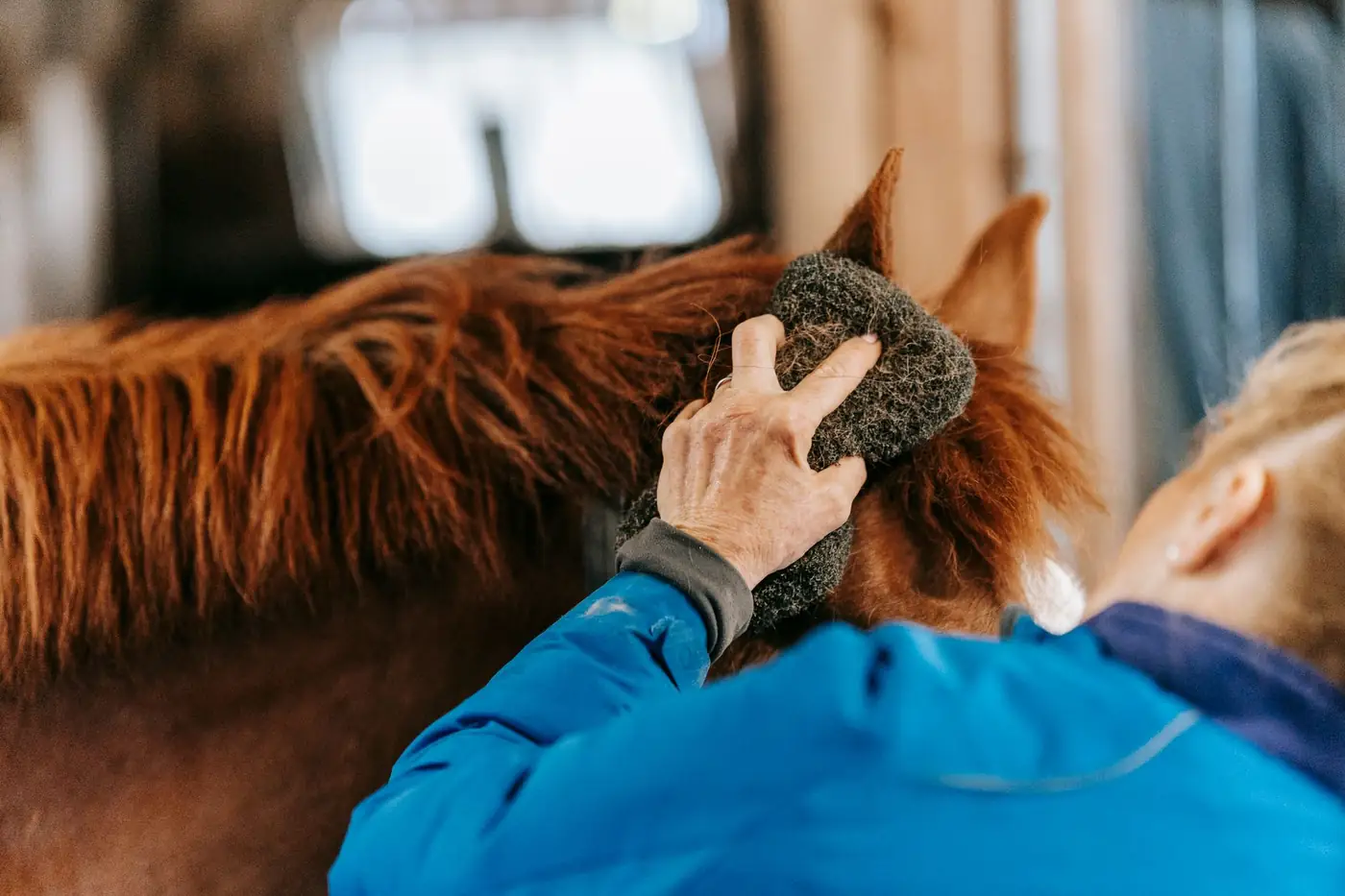
This is when the actual handling work happens, the bit that takes patience rather than physical effort: leading practice with foals, headcollar work with yearlings being prepared for their first outings, quiet standing time with anything nervous or difficult. It is slow, repetitive, and, I would say, the part of the job that separates a good stud groom from a merely competent one, because it is the part with no fixed procedure and no shortcut, just time and a calm approach applied consistently.
Farrier and vet visits, when scheduled, tend to land here too, and a large part of the actual skill in this job is logistics as much as horsemanship: getting the right horse ready at the right time, with the right person holding it, while everything else on the yard still needs doing around the gap that creates.
I have come to think that holding a horse well for the farrier is an underrated skill in its own right, distinct from riding or general handling. A good holder reads a horse's weight shifts before they turn into a snatched foot, keeps a consistent, unhurried presence at the head, and stays alert without transmitting any of that alertness down the rope, because a tense holder produces a tense horse almost every time, whatever the farrier is actually doing.
Afternoon
Afternoons are for the jobs that get squeezed out of a busy morning: tack and rug cleaning, worming and vaccination records updated, paddocks checked for anything that needs fixing before it becomes a hazard, fields walked for poisonous plants that have a habit of appearing overnight after rain. None of this is difficult. All of it matters, and none of it is ever finished, in the sense that there is always another rug that needs cleaning or another fence line that needs checking.
Ragwort walking is a good example of a job that sounds trivial and genuinely is not. It is toxic to horses, cumulative in effect, and grows unpredictably enough that a paddock walked clean in June can have new rosettes showing by August. We walk every field on a rota through the growing season, pulling anything found by the root, and it is exactly the kind of unglamorous, repetitive task that never makes it into anyone's idea of what working with horses looks like, right up until the year someone skips it and pays for that decision later.
Evening, and the Bit That Doesn't End
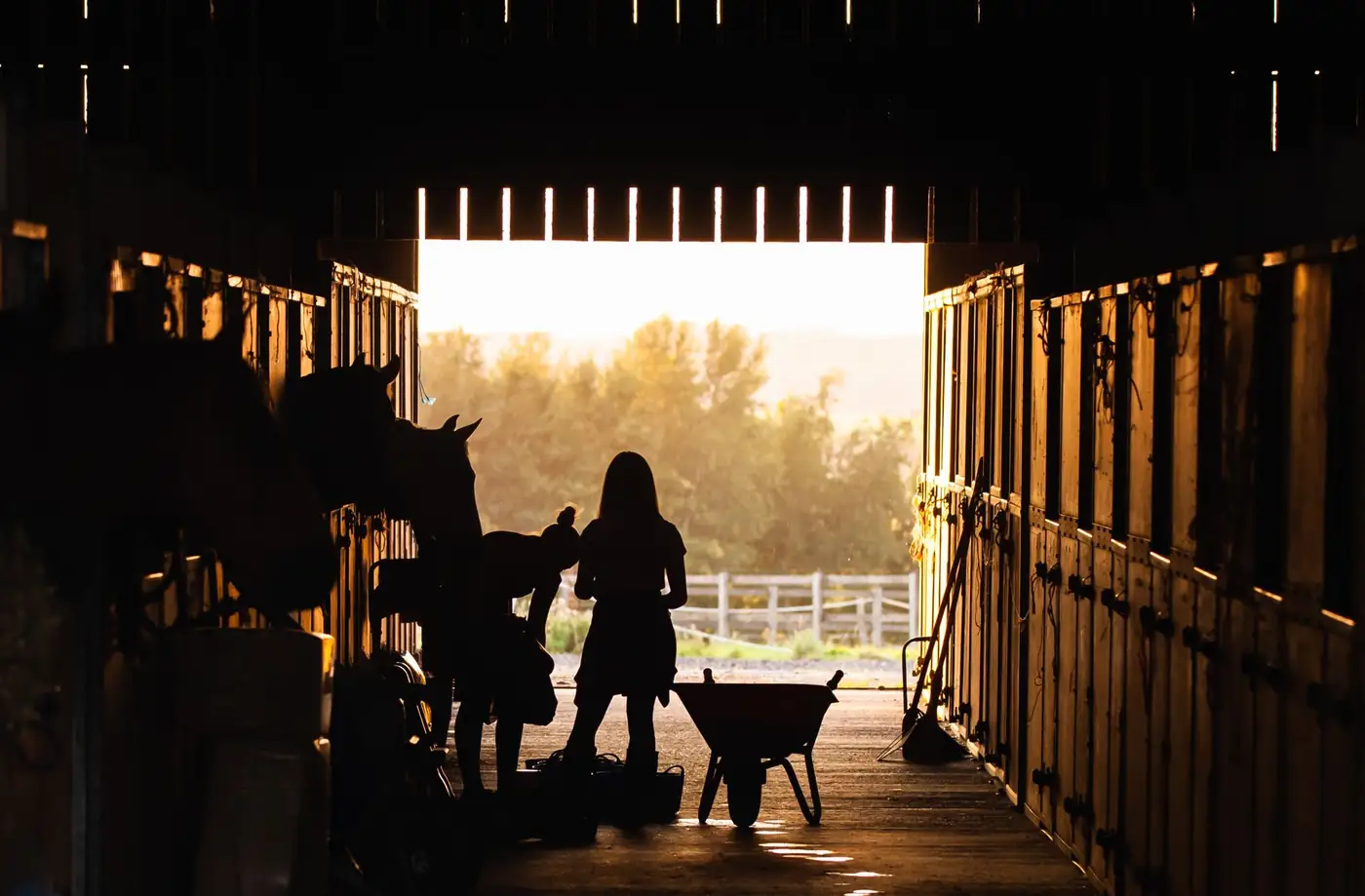
Evening stables mirror the morning: feed, water, a last look at everyone before dark. Through foaling season, as I have written about elsewhere, the actual day does not end there at all, and the hours from ten at night through to six the next morning become their own separate shift of checking and waiting. Outside that season the day has a genuine end, somewhere around six or seven, though anyone who has done this job for long enough develops a habit of glancing toward the yard from the kitchen window even after they have technically finished for the day. It is not really a job you clock off from, so much as one you step back from until the next early alarm.